Recent:
- Preprint: “AI Virtue: What Is ‘Good’ Knowledge in the Age of Artificial Intelligence?” arXiv.org [cs.CY], July 2, 2026. https://doi.org/10.48550/arXiv.2607.01776.
- Blog essay: “Humanities Definitions Research Project: An Experiment with Agentic AI.” 5 October 2025.
- Article: “Data Science and the Post-Liberal Arts University.” Critical Inquiry 51, no. 4 (2025): 597–618. https://doi.org/10.1086/735621.
- Plus: “Liberal Arts Pantocrator: Addendum to ‘Data Science and the Post-Liberal Arts University.’” KCWorks, 24 Sept 2025. https://doi.org/10.17613/vnybw-f6a84.
- Article: “Messages and Values in the Age of Machine Learning: From Postcards to Social Media,” Prace Kulturoznawcze 26, no. 4 (2023): 125–29, https://doi.org/10.19195/0860-6668.26.4.8.
- Commencement speech: “What is Good Writing in the Age of ChatGPT?” (18 June 2023)
- Materials related to Agrippa (A Book of the Dead) owned by Alan Liu
- Blog essay: “Theses on Large Language Models and ‘Good’ Writing” (4 December 2022)
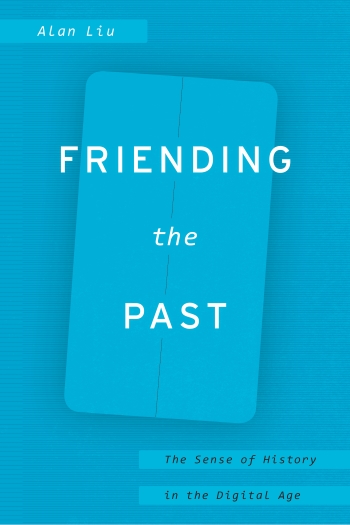 Friending the Past: The Sense of History in the Digital Age. Chicago: University of Chicago Press, 2018
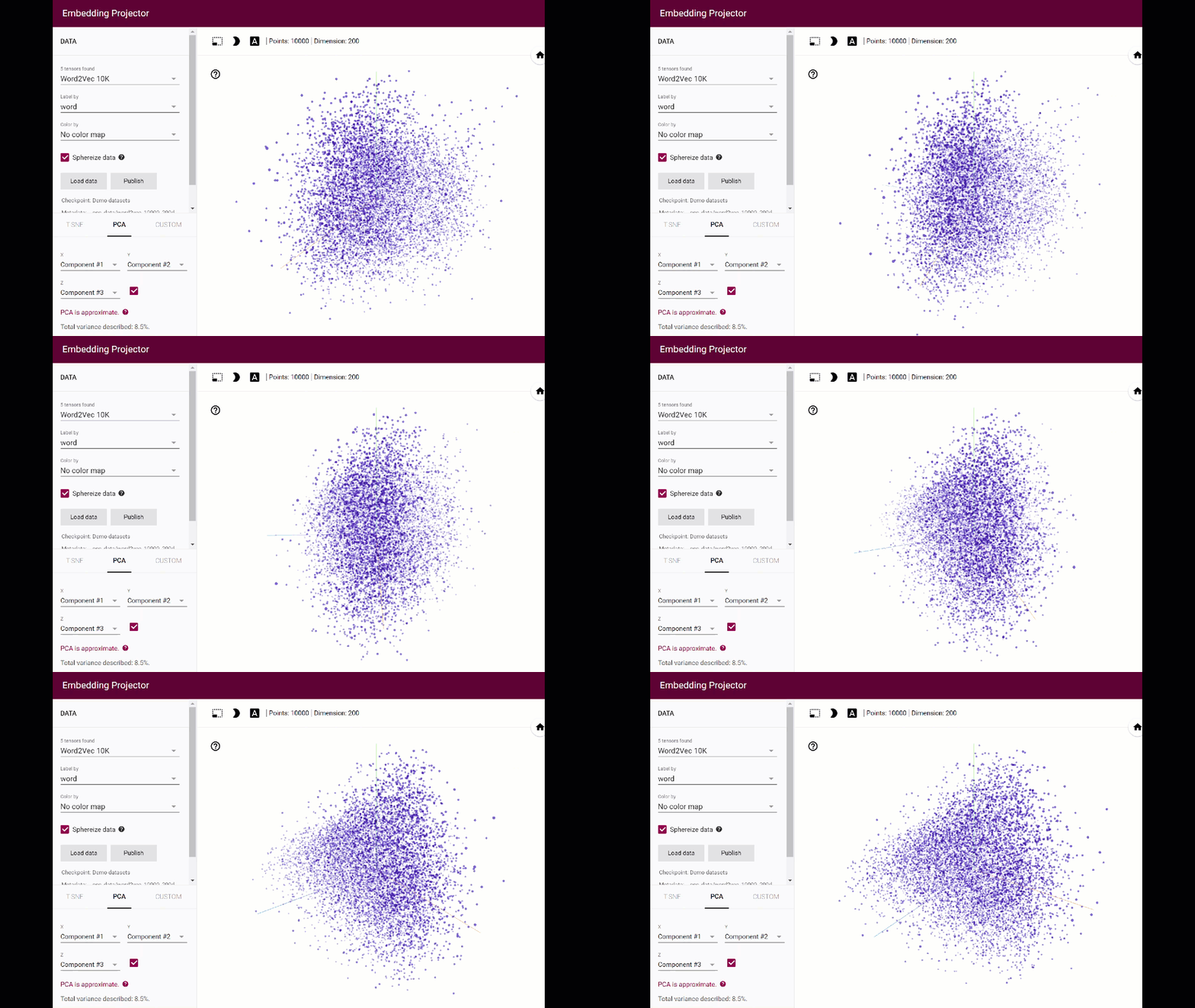 “Digital Humanities Diversity as Technical Problem” (full text of talk presented at MLA 2018)
- Open Letter to the Polish Government: “The Fate of Cultural Studies in Poland” (1 January 2018)
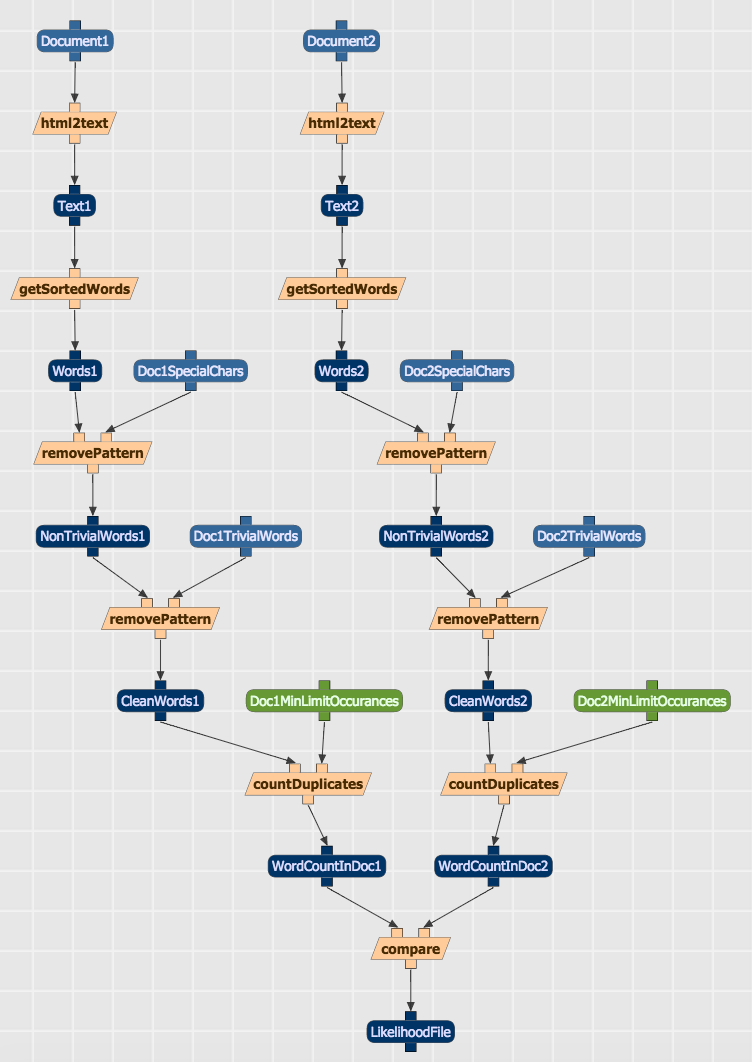 Blog essay: “Assessing Data Workflows for Common Data ‘Moves’ Across Disciplines” (6 May 2017)
- Article: ”Hacking the Voice of the Shuttle: The Growth and Death of a Boundary Object.” Social Media Archeology and Poetics. Ed. Judy Malloy. Cambridge, MA: MIT Press, 2016. (Full text — open-access author’s pre-copy-edited final version in institutional repository)
- Article: “Is Digital Humanities a Field? — An Answer from the Point of View of Language.” Journal of Siberian Federal University: Humanities and Social Sciences 7 (2016): 1546-1552.
- Article: ”N + 1: A Plea for Cross-Domain Data in the Digital Humanities.” Debates in the Digital Humanities 2016. Ed. Matthew K. Gold and Lauren F. Klein. University of Minnesota Press, 2016.
- Blog essay: Drafts for Against the Cultural Singularity (book in progress) (2 May 2016)
I am Distinguished Professor Emeritus in the English Department at the University of California, Santa Barbara, where I taught from 1987 to 2025. I was also an affiliated faculty member of UCSB’s Media Arts & Technology graduate program. At the beginning of my career (1979-1986), I was Assistant Professor and then Associate Professor in Yale University’s English Department and British Studies Program.
I began my research in the field of British romantic literature and art. My first book, Wordsworth: The Sense of History (Stanford Univ. Press, 1989), explored the relation between the imaginative experiences of literature and history. In a series of theoretical essays in the 1990s, I explored cultural criticism, the “new historicism,” and postmodernism in contemporary literary studies.
Subsequently, I was an early and now continuing voice in the “digital humanities” field. This started in 1994, when I created my Voice of the Shuttle Web site for humanities research. That was the era when I began to study information culture as a way to close the circuit between the literary or historical imagination and the technological imagination. In 2004, I published my The Laws of Cool: Knowledge Work and the Culture of Information (Univ. of Chicago Press). In 2008, I also published from Univ. of Chicago Press my Local Transcendence: Essays on Postmodern Historicism and the Database. A new book is appeared from the same press in 2018: Friending the Past: The Sense of History in the Digital Age.
In the late 1990’s, I founded the NEH-funded Teaching with Technology project at UC Santa Barbara called Transcriptions: Literature and the Culture of Information, and my English Dept’s undergraduate specialization on Literature and the Culture of Information. During 2002-2007 I was a member of the Board of Directors of the Electronic Literature Organization (ELO) and chair of the Technology/Software Committee of the ELO’s PAD Initiative (Preservation / Archiving / Dissemination of Electronic Literature). Digital initiatives I then led in the 2000s include Transliteracies: Research in the Technological, Social, and Cultural Practices of Online Reading, a University of California multi-campus, collaborative research group (2005-10); and RoSE (Research-oriented Social Environment), a software project funded by a NEH Digital Humanities Start-up grant (2011-12) that is the culmination of Transliteracies.
I founded and am co-leader of the international 4Humanities advocacy initiative in 2010. During 2017-2021, I was Principal Investigator of the 4Humanities WhatEvery1Says (WE1S) research project, which was supported by a $1.1 million grant from the Andrew W. Mellon Foundation. WE1S digital methods to study a big-data corpus of public discourse about the humanities, and created resources and toolkits for speaking up for the values of the humanities in today’s society. In 2022-2023, I chaired the Modern Language Association’s Committee on Information Technology. Currently I am focusing on co-founding and serving as co-president of the Center for Humanities Communication.