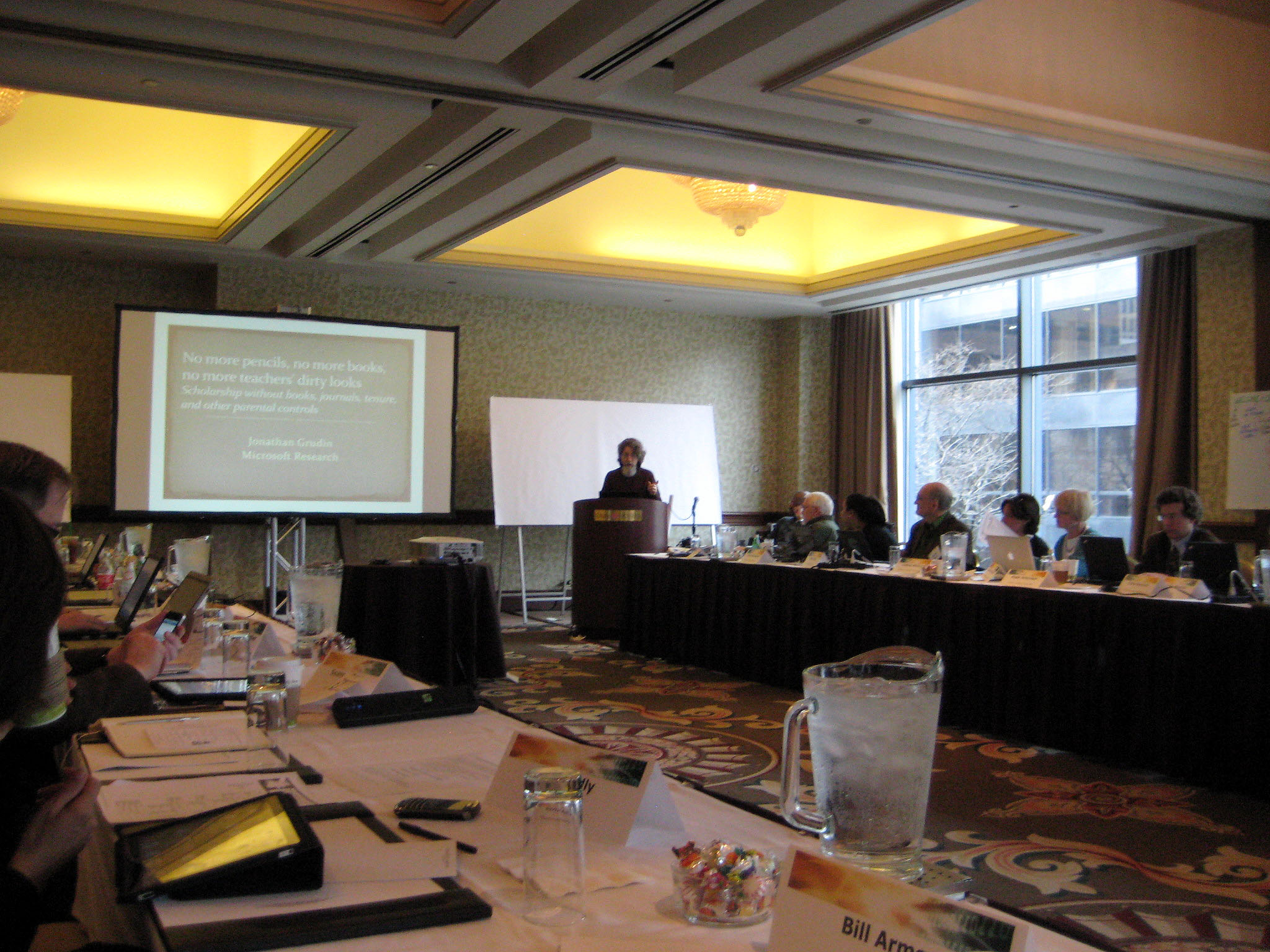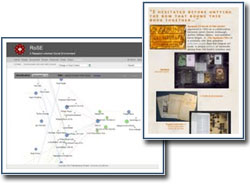
“RoSE (Research-oriented Social Environment).” Compatible Data Initiative meeting, New York City. 24 September 2011. (Talk presented via Skype.)


“Where Is Cultural Criticism in the Digital Humanities?” (50-minute version). University of Nottingham. 5 July 2011.


“Where Is Cultural Criticism in the Digital Humanities?” (30-minute version). Digital Literacies panel. The Future University conference. Centre for Research in the Arts, Social Sciences, and Humanities (CRASSH), Cambridge University. 2 July 2011.


“4Humanities: The Digital Humanities Community & Humanities Advocacy.” Luncheon address at centerNet General Business Meeting, Digital Humanities 2011 conference, Stanford, 22 June 2011.

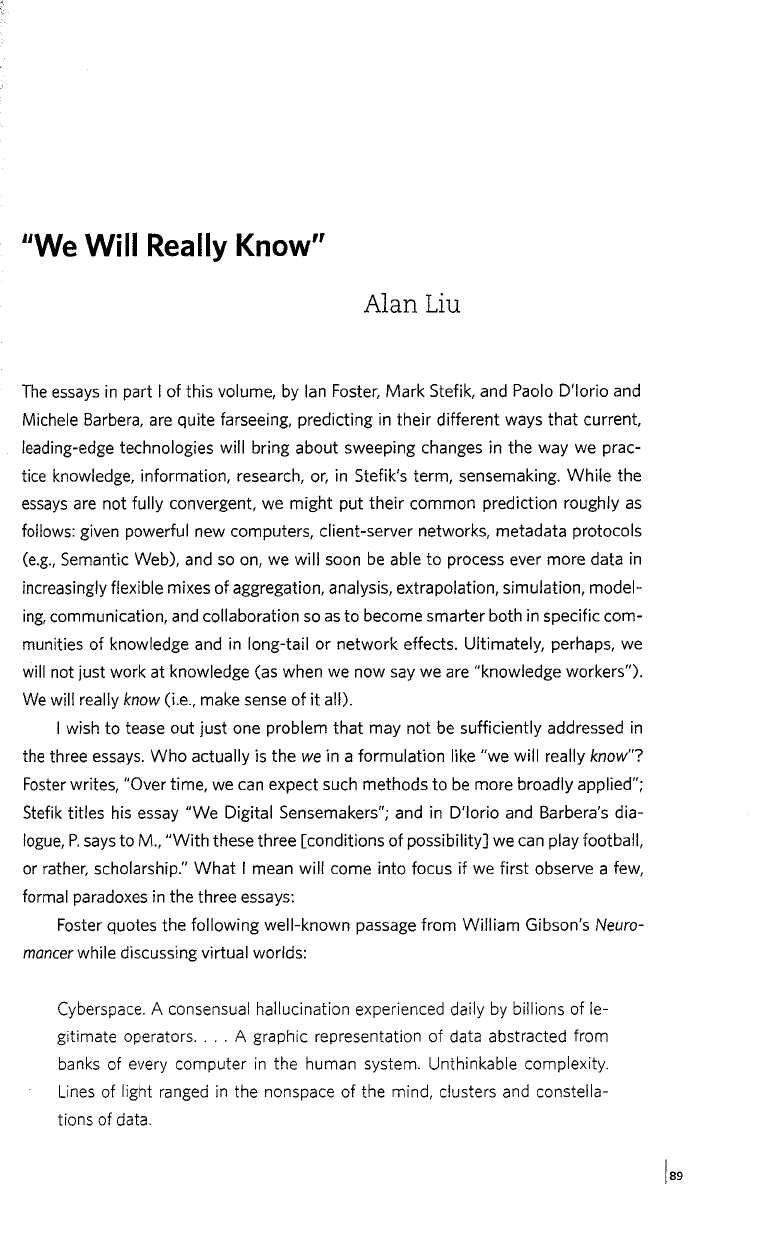
"We Will Really Know"

First page

Citation: “We Will Really Know.” Switching Codes: Thinking Through Digital Technology in the Humanities and Arts. Ed. Thomas Bartscherer and Roderick Coover. Chicago: University of Chicago Press, 2011. 89-94.

“This is Not a Book: Long Forms of Shared Attention in the Digital Age.” Panel on “What is a Book?”, Unbound Book Conference, Central Library, Amsterdam, and Royal Library, The Hague. 20 May 2011.


“Cultural Criticism and the Digital Humanities: Alan Liu.” Interview by Janneke Adema for Culture Machine. 19 May 2011. Amsterdam.


“Introduction to Research Slam.” English Department, University of California, Santa Barbara. 13 May 2011.

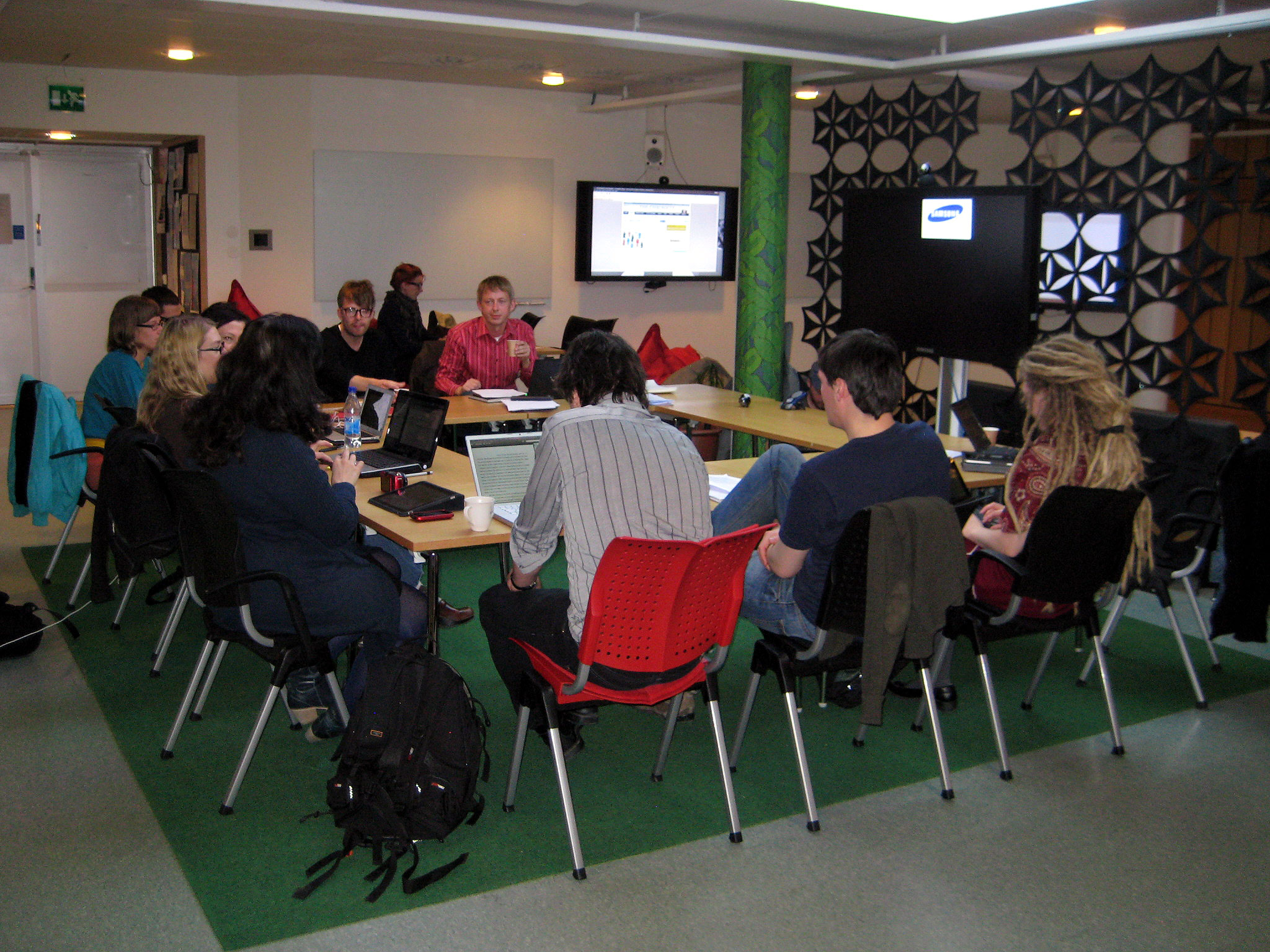
Workshop with Alan Liu, Patrik Svensson, and Whitney Trettien. HUMlab, Umeå University, Sweden. 10 May 2011.


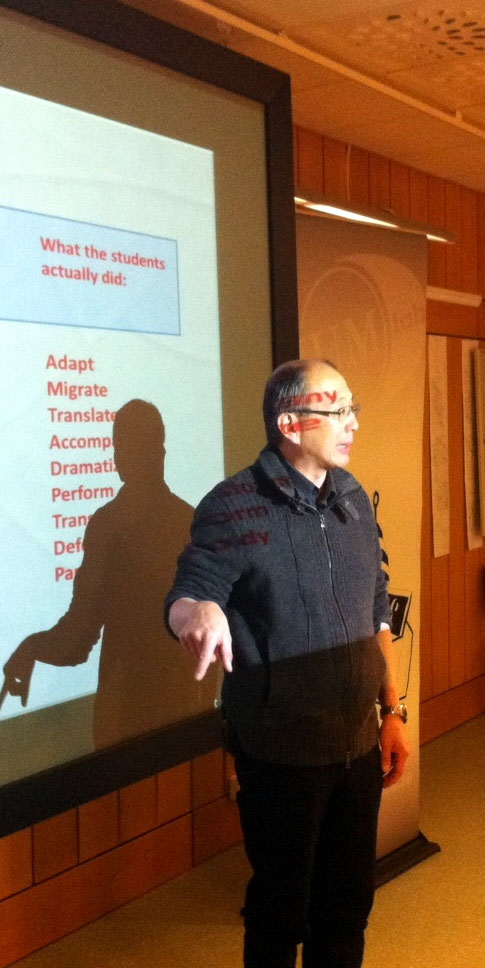
Alan giving talk at HUMlab“Close, Distant, and Unexpected Reading: New Forms of Literary Reading in the Digital Age.” HUMlab, Umeå University, Sweden. 10 May 2011.


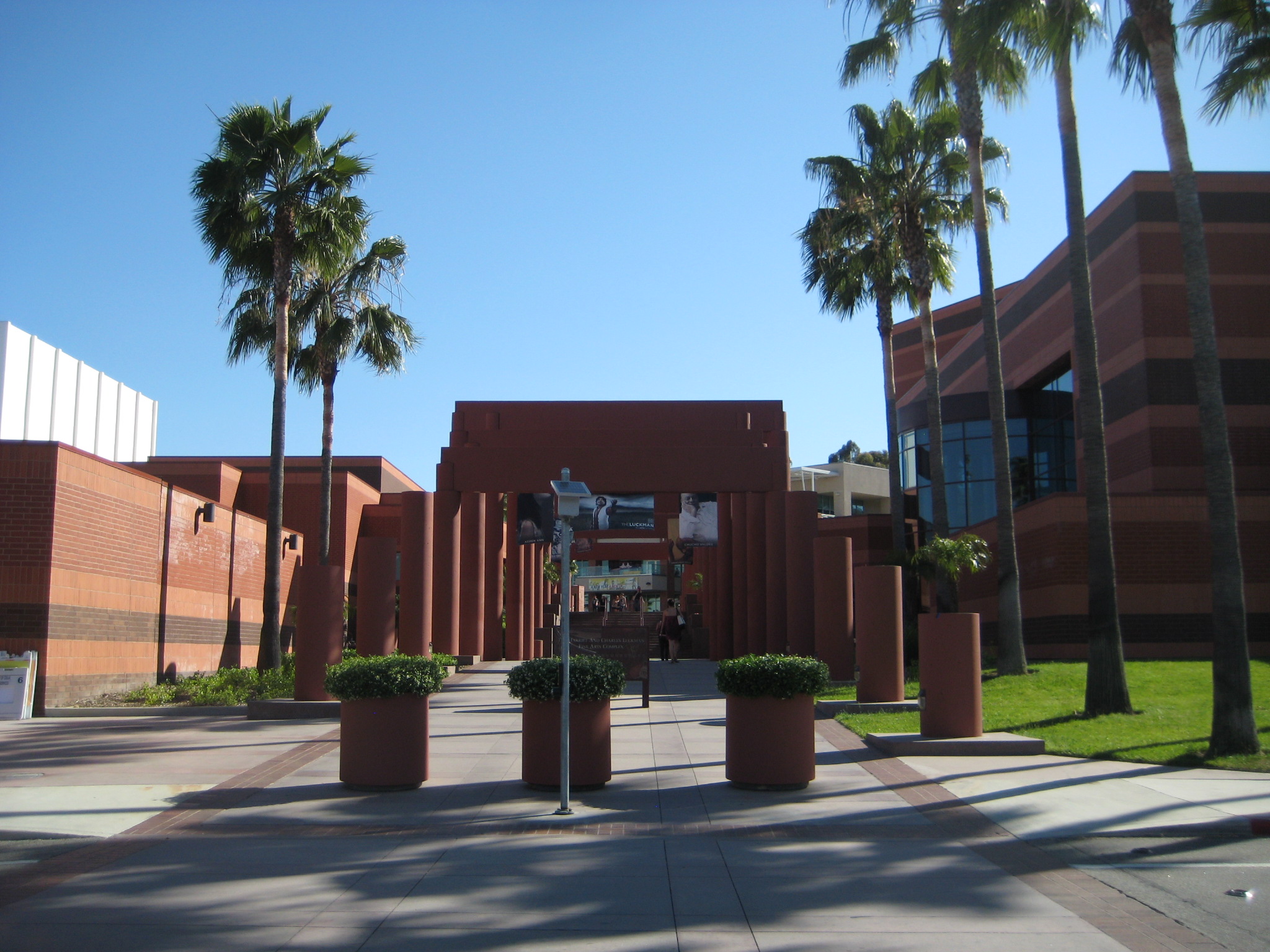
California State University, Los Angeles“Friending the Past: The Sense of History and Social Computing.” California State University, Los Angeles. 2 May, 2011.


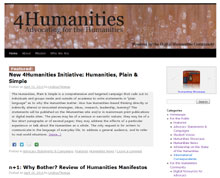
4Humanities home page

URL: https://4humanities.org/
Role: Co-founder and coordinator (with Geoffrey Rockwell and Melissa Terras).
4Humanities is a site created by the international community of digital humanities scholars and educators to assist in advocacy for the humanities. As a platform, 4Humanities stages the efforts of humanities advocates to reach out to the public. It solicits well-reasoned or creative demonstrations, examples, testimonials, arguments, opinion pieces, open letters, press releases, print posters, video “advertisements,” write-in campaigns, social-media campaigns, short films, and other innovative forms of humanities advocacy, along with accessibly-written scholarly works grounding the whole in research or reflection about the state of the humanities. As a resource, 4Humanities provides humanities advocates with a stockpile of digital tools, collaboration methods, royalty-free designs and images, best practices, new-media expertise, and customizable newsfeeds of issues and events relevant to the state of the humanities in any local or national context. (Also see 4Humanities local chapters, including the 4Humanities@UCSB local chapter, co-directors Claudio Fogu and Alan Liu.)

Suggested Citation: 4Humanities – Advocating for the Humanities. Home page. Retrieved [Date of access, e.g., 19 April 2011]. <https://4humanities.org/>


RoSE home page

URL: http://rose.english.ucsb.edu [guest login available; active login by request]
Role: Project Lead.
White Paper for NEH: “Friending the Humanities Knowledge Base: Exploring Bibliography as Social Network in RoSE” (PDF)

Created in its first stage as an outcome of the Transliteracies Project, RoSE completed a second stage of development under a NEH Digital Humanities Start-up Grant (Level II) [Grant number: HD-51433-11]. RoSE is a Web-based knowledge-exploration system that fuses a social-computing model to humanities bibliographical resources to allow users to explore the present and past of the human record as one “social network.” Stocked with initial information data-mined from YAGO and Project Gutenberg (with plans for data-mining the SNAC Project), RoSE provides profile pages about persons and documents, keywords and other data, and visualizations that help users see the relationships between people and documents. Uniquely, it also allows users (humanities students, scholars, and research groups) to add “thickly described” metadata on top of standard bibliographical data. This facilitates a social-network-like sense of active, dynamic interrelation with the objects of research.

Suggested Citation: RoSE (Research-oriented Social Environment). Home page. Transliteracies Project, University of California. Retrieved [Date of access, e.g., 19 April 2011]. <http://rose.english.ucsb.edu/>


Emerging Configurations Charrette“The Rebound Book: What Binds a Book Together in the Digital Age?” Workshop on Emerging Configurations of the Virtual and the Real, Chicago (hosted by School of Information Sciences, University of Pittsburgh). 20 March 2011.


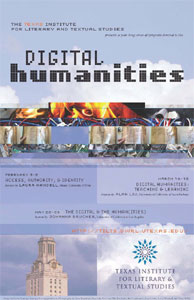
Poster for TILTS Symposium, U Texas Austin“The University in the Digital Age: The Big Questions.” Texas Institute of Literary and Textual Studies symposium on “Digital Humanities: Teaching and Learning.” University of Texas, Austin. 10 March 2011. (Talk presented via Skype.)


Pedagogy Session: “A Digital Approach to Collaborating Across Disciplines: Literature+”. Conference on “Literature, Creativity, and Print Culture: Sustainability in a Digital Age” (7th Annual Undergraduate Literature and Creative Writing Conference). Susquehanna University. 21 February 2011.


“Close, Distant, and Unexpected Reading: New Forms of Literary Reading in the Digital Age.” Conference on “Literature, Creativity, and Print Culture: Sustainability in a Digital Age” (7th Annual Undergraduate Literature and Creative Writing Conference). Susquehanna University. 21 February 2011.


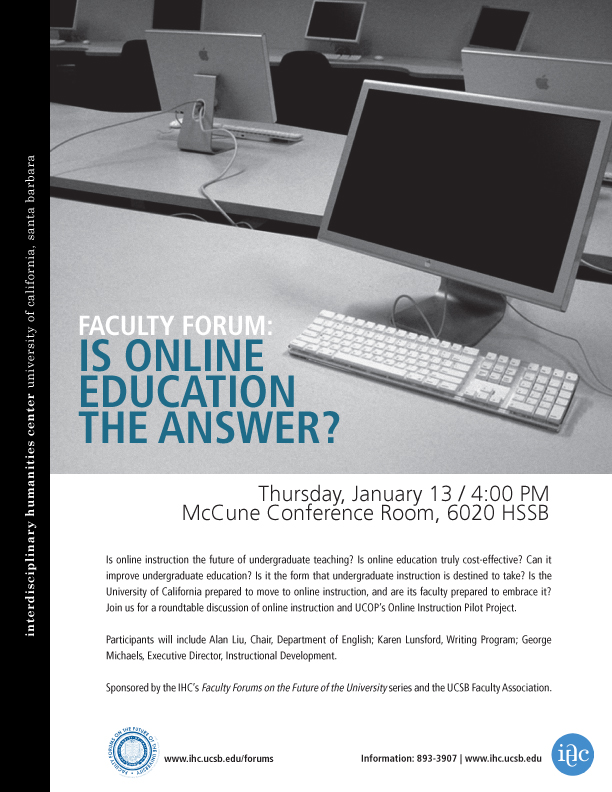
Faculty Forum Poster“Toward a Larger Vision of Digital Instruction: Critical Reflections on the UC Online Instruction Pilot Project.” Faculty Forum on “Is Online Education the Answer?” Interdisciplinary Humanities Center, University of California, Santa Barbara. 13 January 2011.


“Close, Distant, and Unexpected Readings.” Panel on “So Close and Yet So Far: Close Reading and Sociology.” Modern Language Association convention. Los Angeles. 9 January 2011.


Citation: “Where is Cultural Criticism in the Digital Humanities?” Alan Liu, 7 January 2011. https://liu.english.ucsb.edu/where-is-cultural-criticism-in-the-digital-humanities/

Excerpt

This is the original full text of a paper presented at the panel on “The History and Future of the Digital Humanities,” Modern Language Association convention, Los Angeles, 7 January 2011. (The paper was delivered in truncated, improvised form at the actual event due to time constraints.) An expanded version of this paper (full text) was later published under the same title in Debates in the Digital Humanities, ed. Matthew K. Gold (Minneapolis: University of Minnesota Press, 2012): 490-509.

This is the occasion to announce the new initiative titled 4Humanities: Advocating for the Humanities, which is subtitled “Powered by the International Digital Humanities Community.” The site, which I and a collective of digital humanists in the U.S., Canada, U.K., and Australia started in November 2010 in the wake of discussion on the Humanist List about whether the digital humanities had become too “industrialised” and about the budget “cuts” in the United Kingdom, is a platform for advocacy statements for the humanities and other forms of showcasing the value of the humanities. The premise of the site is that the digital humanities have a special role to play today in helping the humanities communicate in contemporary media networks. . . .


“Where Is Cultural Criticism in the Digital Humanities?” Panel on “The History and Future of the Digital Humanities.” Modern Language Association convention. Los Angeles. 7 January 2011.


“From Reading to Social Computing.” Department of English, University of Maryland, College Park. 5 October 2010.


“Rerouting Creativity: New Media Arts after the Ideology of Creativity.” Arts and Humanities Dean’s Lecture Series, University of Maryland, College Park. 4 October 2010.


Workshop on “When Was Linearity? What Graphics Mean in the Digital Age.” Center for the Arts in Society, Carnegie Mellon University. 17 September 2010.

“Remembering Networks: Agrippa, RoSE, and Network Archaeology.” Center for the Arts in Society, Carnegie Mellon University. 16 September 2010.

  • Abstract: In 1992, at the onset of the digitally networked aged, publisher Kevin Begos, Jr., artist Dennis Ashbaugh, and novelist William Gibson issued their collaborative artist book Agrippa (a book of the dead), whose last pages contained a self-encrypting, “vanishing” poem on a diskette. The poem immediately went viral on the networks and clinched Agrippa’s status as a prototypical networked book or “book that became a network.” Agrippa Files and RoSEBasing his talk on Agrippa as well as on The Agrippa Files site that he and graduate students built to document the book’s media and contexts, Alan Liu speculates on how a “network archaeology” might be possible that extends the scholarly approaches of “media archaeology” and “the history of the book” to past works that are networked. Liu will conclude with a presentation of the RoSE (Research-oriented Social Environment) online system that the Transliteracies Project he directs created to capture networks of past writers, readers, and works through present social-network technologies.


Interview by David Miller, Director, Center for Digital Humanities, University of South Carolina. 10 September 2010.


“From Reading to Social Computing.” Center for Digital Humanities, University of South Carolina. 9 September 2010.


“Literature and Social Mapping: From Reading to Social Computing.” University of Tennessee, Knoxville. 26 August 2010.


Workshop on “Escaping History: The New Historicism, Databases, and Contingency” (chap. 9 of Local Transcendence: Essays on Postmodern Historicism and the Database). University of Tennessee, Knoxville. 26 August 2010.


“Against the Monotony of Singularity: Humanities Institutions and Collective Intelligence.” Roundtable on “Collective Intelligence or Silicon Cage?: Digital Culture in the Twenty-First Century – A Bilingual Dialogue between Alan Liu and Pierre Lévy.” Society for Digital Humanities 2010 Conference. Montreal. 2 June 2010.

“From Reading to Social Computing.” Workshop in the Stanford U., Mills C., UC Berkeley, and UC Santa Cruz “What is a Reader?” project. Stanford University. 21 May 2010.


“RoSE (Research-oriented Social Environment).” Media Arts & Technology 595M Seminar Series. University of California, Santa Barbara. 17 May 2010.


“From Reading to Social Computing.” Keynote address. Northeast Modern Language Association convention. Montreal. 9 April 2010.


“Friending the Past: The Sense of History and Social Computing.” Maxwell Cummings Distinguished Lecture. McGill University. 8 April 2010.


“From Reading to Social Computing.” University of Kansas, Lawrence. 8 March 2010.


“RoSE (Research-oriented Social Environment).” Transliteracies Project Design Charrette. University of California, Santa Barbara. 16 February 2010.


Citation: “The End of the End of the Book: Dead Books, Lively Margins, and Social Computing.” Michigan Quarterly Review, 48 (2009): 499-520. Special issue on “Bookishness: The New Fate of Reading in the Digital Age”


/ excerpt » /

“The Future of Graduate Education.” Panel on the Future of Graduate Education. Interdisciplinary Humanities Center, University of California, Santa Barbara. 29 October 2009.


Citation: “Thinking Destruction: Creativity, Rational Choice, Emergence, and Destruction Theory.” Occasion: Interdisciplinary Studies in the Humanities, 1.1 (October 15, 2009). https://shc.stanford.edu/arcade/publications/occasion/rational-choice-theory-and-humanities/thinking-destruction-creativity

/ excerpt » /

Citation: “A New Metaphor for Reading.” Invited contribution to “Room for Debate” forum on “Does the Brain Like E-Books?” New York Times, 14 October 2009. http://roomfordebate.blogs.nytimes.com/2009/10/14/does-the-brain-like-e-books/

Excerpt

Initially, any new information medium seems to degrade reading because it disturbs the balance between focal and peripheral attention. This was true as early as the invention of writing, which Plato complained hollowed out focal memory. Similarly, William Wordsworth’s sister complained that he wasted his mind in the newspapers of the day. It takes time and adaptation before a balance can be restored, not just in the “mentality” of the reader, as historians of the book like to say, but in the social systems that complete the reading environment.

Right now, networked digital media do a poor job of balancing focal and peripheral attention. We swing between two kinds of bad reading.


« Previous PageNext Page »